

Despite its bougie reputation, cashmere doesn’t have to be a luxury. The average acrylic fast fashion sweater is hovering in the $60-$120 region — for that price or cheaper, there are about a million buttery soft secondhand cashmere pieces waiting to wrap you up in a plush, sustainably circular hug.
Even getting into non-acrylics, lower grade new cashmere pieces (not talking true luxury goods here) are priced well beyond their secondhand counterparts. A Reformation 95% cashmere jumper currently retails for $328. This 100% cashmere argyle jumper on eBay in a similar cut sold for $39.99 after I shared it in a TikTok last week.
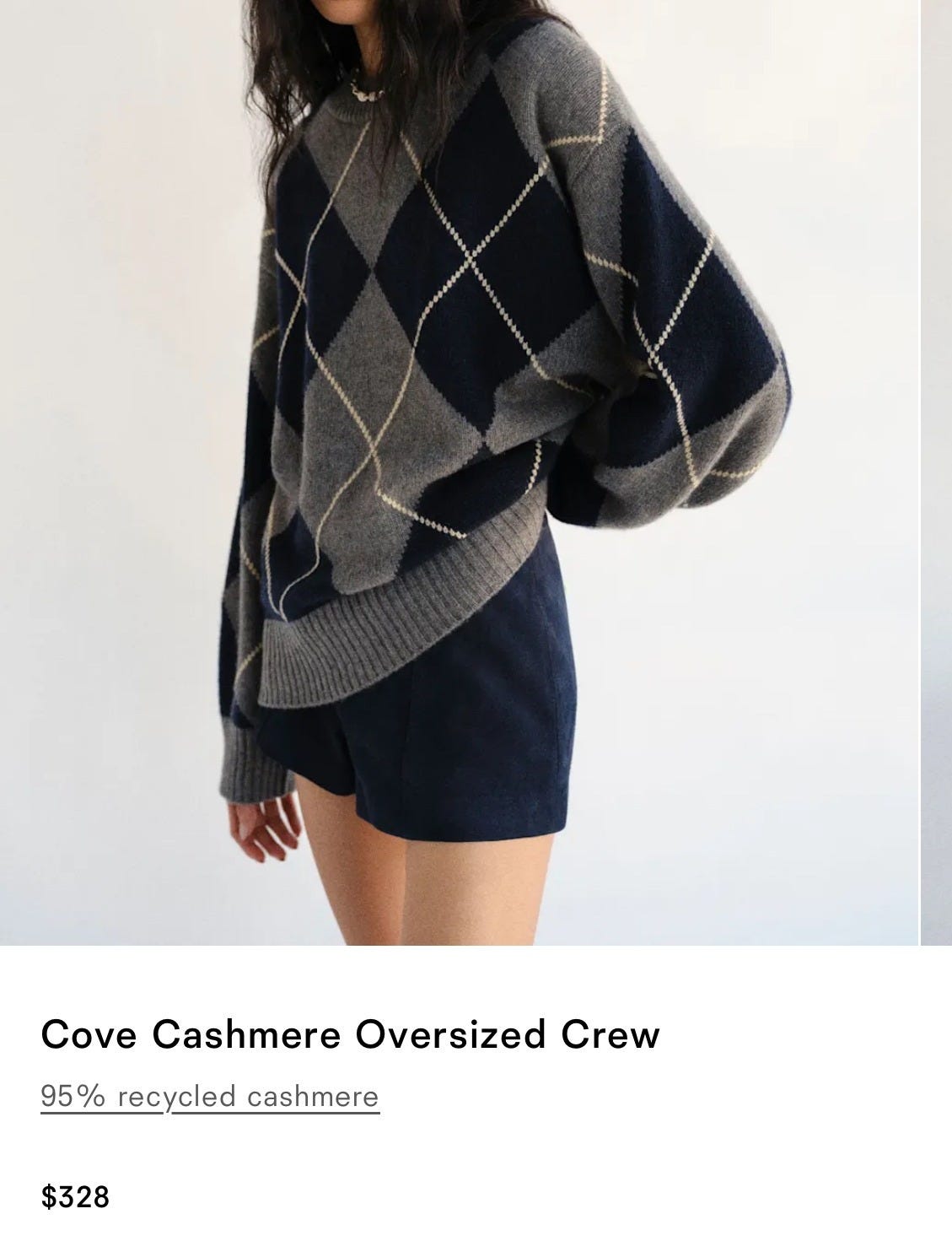
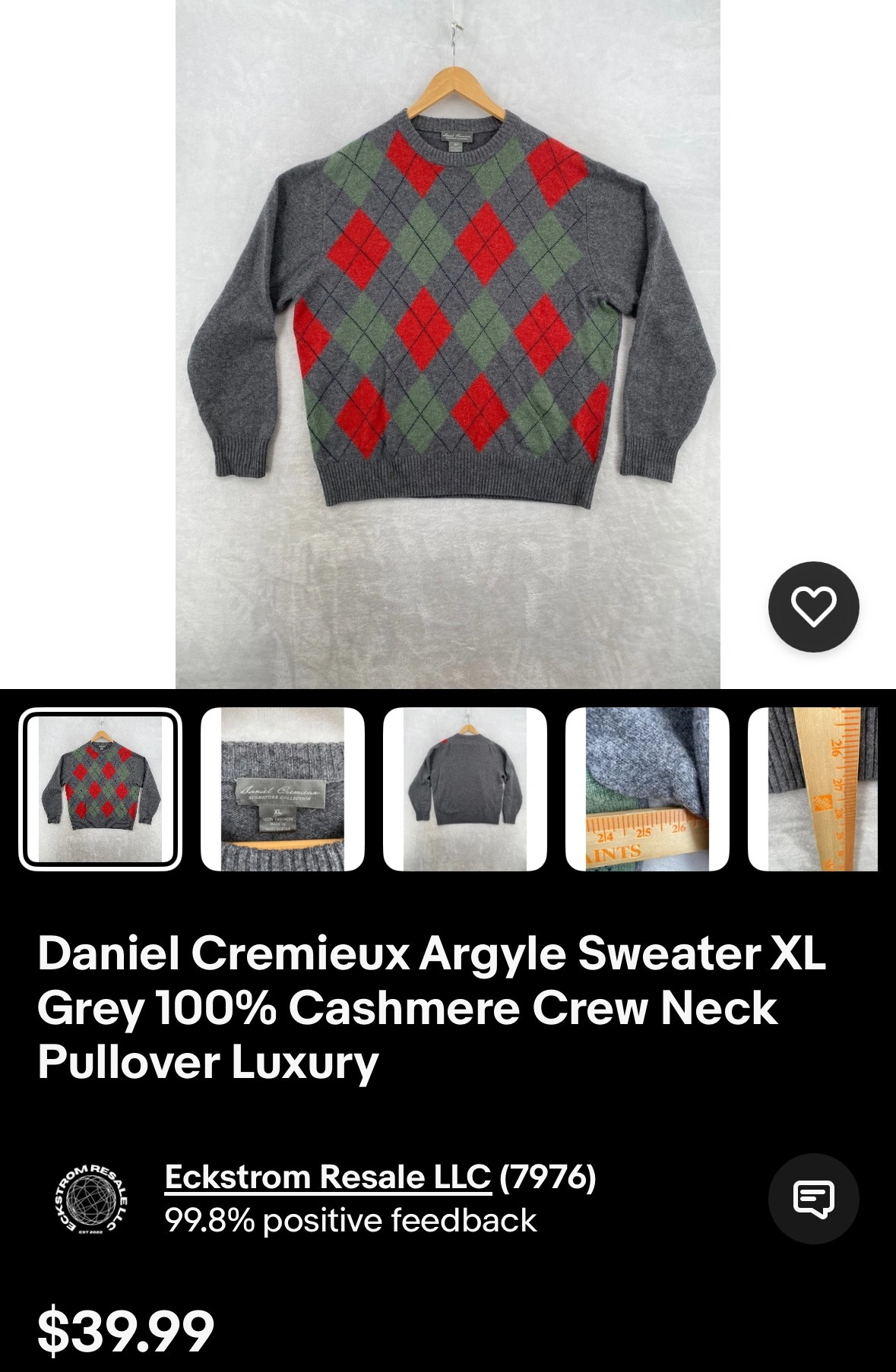
There’s a reason people pay so much for it new: a good cashmere sweater feels like a torso-shaped cloud or a blanket of gentle kittens. It’s warm, it’s breathable, it’s what every good Nancy Meyers woman’s closet is full of. But it doesn’t have to come with a startling price tag! Cashmere on the resale market is available at all price points, from Goodwill numbers in the teens to the several hundred range for rare vintage styles. And whatever your budget is, you can almost always get a higher quality piece for that price secondhand.
In this letter:
a quick lesson on cashmere, what it is and how to determine its quality
an index of 41 brands to search for the good shit secondhand
and 53 vintage and secondhand 100% cashmere sweaters starting at $16
Vintage wool more your style?


Cashmere originated in Kashmir (a territory that has historically been claimed by India, Pakistan, and China) and has been used in knitwear for thousands of years.
It became popular in Europe in the 18th century and made its way to America in the early 19th century. It hit the American mainstream in the 1940s through Austrian Bernhard Altmann who lost his European textile business and fled to the States from Nazi persecution.
Cashmere is a fiber sourced from shaving or combing the fur of cashmere goats. The majority of the world’s cashmere comes from China and Mongolia (cold winters mean heartier fur).
Higher grade cashmere has thinner and longer fibers which make for an incomparably soft garment less prone to pilling and shedding.
Lower grade cashmere has thicker, shorter fibers that aren’t quite as luxurious to the touch and more prone to pilling and shedding. (Personally, I’d choose lower grade secondhand cashmere over “high” quality new acrylic any day.)
You can test cashmere in-store by rubbing it up against itself or your finger for a minute. Really low quality cashmere will pill pretty quickly, and high quality cashmere should look no different at all.
Lower grade cashmere doesn’t mean bad cashmere, however, and it’s relatively easy to breathe new life into a pilled sweater using a cashmere comb.
